



Impact of California's Flavored Tobacco Ban on Adult Smoking

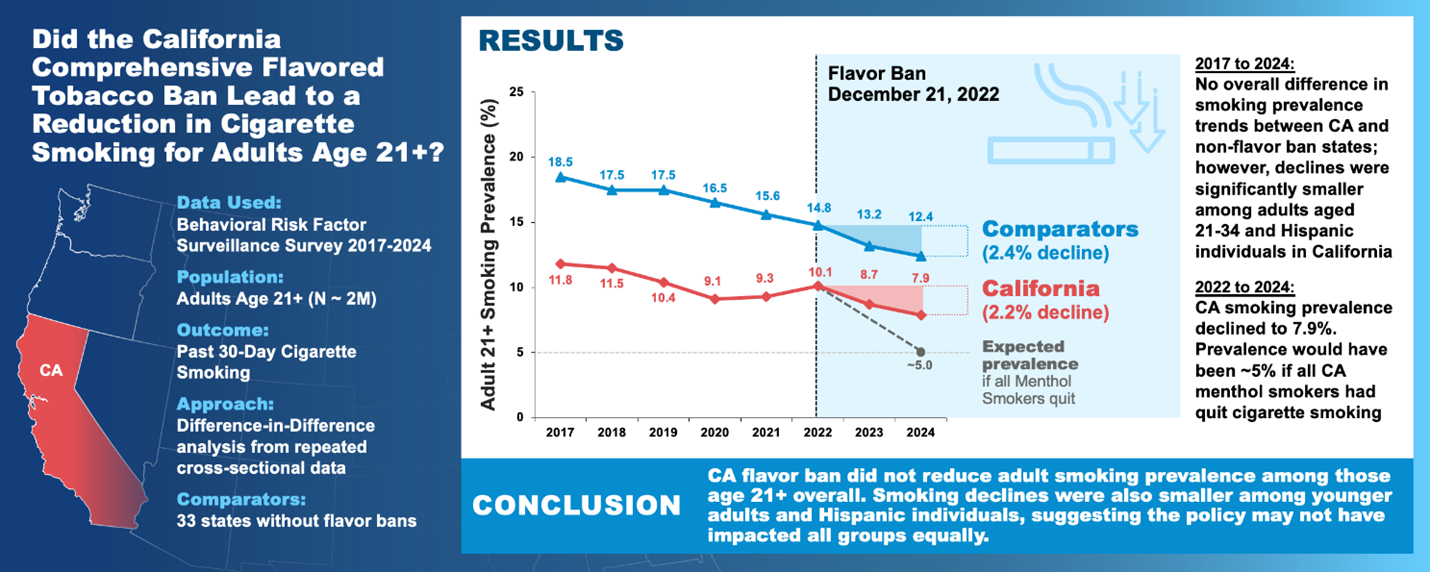
California's Flavor Ban Fell Short of Its Intended Goal
In December 2022, California implemented one of the nation's most comprehensive flavored tobacco bans, prohibiting the sale of flavored tobacco products, including menthol cigarettes. The policy was intended to reduce tobacco use and improve public health outcomes. However, understanding whether such policies achieve their intended goals requires careful evaluation of real-world behavioral outcomes.
A new study by Altria scientists published in the American Journal of Health Behavior examined the impact of California's flavored tobacco ban on adult cigarette smoking using data from the Behavioral Risk Factor Surveillance System (BRFSS), one of the largest ongoing health surveys in the United States. Researchers applied a difference-in-differences analytical approach, comparing changes in smoking prevalence in California before and after the ban to changes observed in states without flavored tobacco restrictions.
Key Findings
- No significant overall effect on adult smoking: Adult cigarette smoking prevalence continued to decline in California following implementation of the flavor ban. However, after adjusting for demographic and other factors, the decline was similar to that observed in states without flavor restrictions, and the policy was not associated with a statistically significant reduction in overall adult (21+) smoking prevalence.
- Smaller declines among key populations: Smoking prevalence declined less among adults aged 21–34 and Hispanic adults in California than among comparable populations in states without bans. These findings suggest that the policy may have affected populations differently and underscore the importance of examining impacts beyond overall population averages.
Why These Findings Matter
Public health policies are often evaluated based on their intended outcomes but understanding unintended or uneven effects across populations is equally important. Bans that fail to produce the result intended by policy makers and that affect some groups differently warrant additional examination to understand underlying behavioral responses and potential consequences.
The California flavored tobacco ban highlights the complexity of tobacco-use behavior and the challenges of predicting how consumers respond to product restrictions and bans. Factors such as product substitution, cross-border purchasing, existing smoking trends, and varying levels of awareness and compliance can influence policy outcomes and should be considered when evaluating effectiveness.
Informing Future Tobacco Regulation
Evidence-based policymaking depends on understanding not only whether a policy works, but for whom it works and under what circumstances. Studies such as this contribute to a growing body of research evaluating the real-world effects of flavored tobacco restrictions and provide important insights for regulators, researchers, and public health stakeholders.
As tobacco and nicotine policy continues to evolve, analyses of population-level outcomes can help inform approaches that maximize public health benefits while minimizing unintended consequences. The findings from California underscore the importance of continually assessing policy impact across diverse adult populations and using data to guide future regulatory decisions.